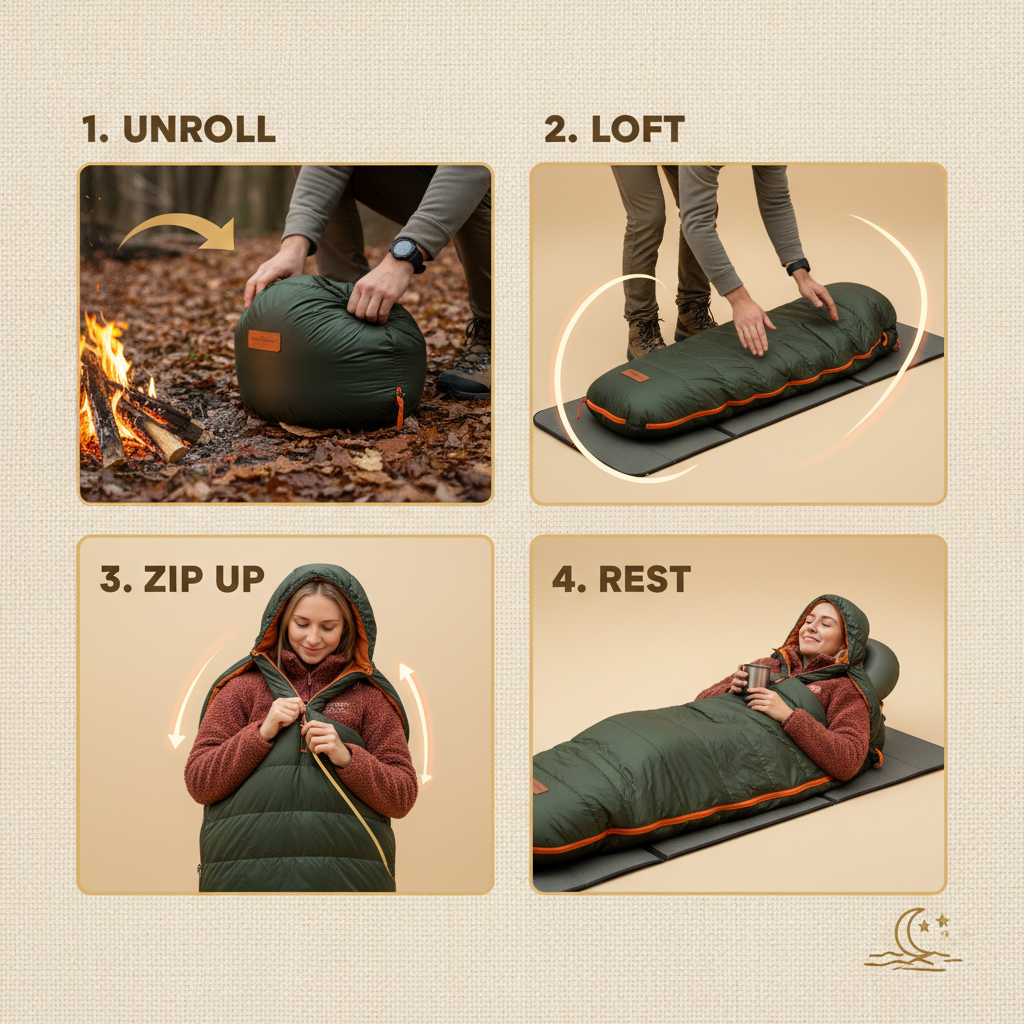
The global outdoor gear market is currently undergoing a significant transition toward high-performance, multi-seasonal versatility. For brands looking to scale, partnering with a reliable oem outdoor sleeping bag manufacturer has become a strategic necessity to balance technical specifications with cost-effective production.
Modern consumers no longer seek a simple sleeping bag; they demand specialized thermal regulation, moisture management, and extreme portability. This shift places immense pressure on the manufacturing process, requiring a deeper integration of advanced textile chemistry and ergonomic design to ensure safety in near-freezing conditions.
This analysis explores the critical engineering benchmarks for outdoor sleep systems, from material selection to OEM customization workflows, providing a framework for procurement managers to evaluate production quality and technical compliance.


The core of thermal retention in outdoor sleep systems lies in the ability of the fill material to trap stagnant air. High-quality polyester fills are frequently utilized due to their resilience and ability to maintain loft even in damp environments, unlike some traditional natural fibers.
An experienced oem outdoor sleeping bag manufacturer focuses on the denier and weave density of the outer shell. For instance, 290T polyester provides a critical balance between durability and weight, preventing the fill from migrating while ensuring the fabric can withstand the friction of rough terrains.
When evaluating a sleep system, the dimensions—such as a standard 86.6"L x 33"W—are not merely about size but about the volume of air the user occupies. A tighter fit reduces the amount of air the body must heat, directly improving the efficiency of the thermal lining.
Weight is another pivotal engineering constraint. A system weighing approximately 4.2 pounds must balance the thickness of the polyester lining with the necessity for a compression sack. The ability to compress the volume without damaging the fill fibers is a key indicator of the manufacturer's textile quality.
Closure systems, specifically high-grade zippers, are the primary failure points in outdoor gear. The integration of reinforced zipper tracks ensures that the bag remains sealed against drafts, which is essential for maintaining a stable internal microclimate in near-freezing temperatures.
Waterproofing in sleeping bags is achieved through a combination of DWR (Durable Water Repellent) coatings and double-layer technology. The primary challenge is achieving water resistance without sacrificing the breathability of the fabric.
This approach transforms the sleeping bag from a simple insulator into a functional moisture-management system. This is particularly critical for 3-4 season bags designed for unpredictable alpine or coastal environments.
To ensure consistency across mass production, manufacturers implement rigorous testing protocols. These benchmarks typically measure the correlation between fill weight, fabric density, and the resulting thermal efficiency.
The following data represents a normalized engineering assessment of various configuration profiles typically handled by an oem outdoor sleeping bag manufacturer to meet diverse market needs.
In typical deployment scenarios, brands utilize OEM capabilities to create specialized product lines. For example, an "Army Sleeping Bag" requires higher abrasion resistance and camouflage specifications, whereas a "Kid Sleeping Bag" focuses on skin-friendly 100% polyester linings and safety-certified closures.
Another representative engineering scenario is the "Double Sleeping Bag" configuration. This requires reinforced stitching at the zipper junctions to support the combined weight of two users without compromising the structural integrity of the thermal envelope.
The industry is moving toward "smart" insulation materials that can dynamically adjust their loft based on ambient temperature. While still in the R&D phase, the goal is to reduce the bulk of all-season bags while maintaining extreme cold performance.
Sustainability is also driving a shift toward recycled polyester. The engineering challenge here is maintaining the same 290T durability and waterproof efficiency using post-consumer plastics without increasing the weight of the final product.
We anticipate a higher demand for modular sleep systems, where an inner mummy bag can be zipped into a larger envelope bag, allowing users to customize their thermal protection based on real-time weather data.
Selecting the right manufacturing partner requires a structured evaluation of their technical capabilities. Beyond simple pricing, procurement managers must assess the certifications and customization flexibility of the facility.
The following matrix provides a comparison of typical configuration profiles offered by a professional oem outdoor sleeping bag manufacturer to guide selection based on target market needs.
It is critical to align the chosen configuration with the intended end-use environment, as a high-duty configuration may be overkill for casual picnic mats but essential for alpine expeditions.
| Profile Type | Primary Material | Thermal Rating | Recommended Use |
|---|---|---|---|
| Basic Configuration | Light Polyester | Low to Mid | Indoor / Summer Camping |
| Standard Configuration | 290T Polyester | Mid Range | General Hiking / 3-Season |
| High-Duty Configuration | Reinforced Polyester | High Range | Professional Expedition |
| Precision Configuration | Technical Blend | Optimized | Weight-Critical Trekking |
| Automated Configuration | Standardized Poly | Consistent Mid | Mass Market Retail |
| Industry Baseline | Standard Polyester | Variable | Entry-level Outdoor Gear |
A reputable manufacturer should hold BSCI for factory social compliance and product-specific certifications such as SGS, CNTAC, and Hohenstein Textile Tests. These ensure that the fabrics are skin-friendly, non-toxic, and meet international durability and safety standards for outdoor use.
Double-layer technology creates a sophisticated moisture barrier. By using two distinct layers of polyester, the system prevents external water from reaching the insulating fill while allowing internal perspiration to evaporate. This maintains the loft of the polyester fill, which is essential for trapping heat in cold weather.
Yes, customization is a core part of the OEM process. Manufacturers can adjust the fill weight, the thickness of the polyester lining, and the shell material to target specific temperature ratings. This includes modifying the shape (e.g., Mummy vs. Envelope) to optimize heat retention for different climates.
Sample delivery usually takes about 5 working days, including shipping. This allows the client to verify the material feel, zipper quality, and dimensions. Once the sample is approved, the first mass order typically takes between 20 to 30 working days depending on the order volume and customization complexity.
Durability is evaluated through abrasion tests and tear-strength analysis. A 290T weave is generally recognized in the industry for providing a high strength-to-weight ratio, making it suitable for rough ground. Buyers should check for consistent stitching and the quality of the reinforced edges at the foot and head areas.
Professional manufacturers operate their own logo printing workshops, offering options such as screen printing, embroidery, or woven labels. Most OEM partners allow full customization of the logo design and placement on both the sleeping bag and the accompanying compression sack.
The transition toward multi-functional, weather-resistant outdoor gear necessitates a partnership with an oem outdoor sleeping bag manufacturer that prioritizes technical precision over simple mass production. By focusing on 290T polyester durability and double-layer waterproof technology, brands can ensure their products meet the rigorous demands of modern explorers.
Ultimately, the successful deployment of a sleep system depends on the balance between weight, thermal efficiency, and structural integrity. Procurement teams are encouraged to utilize technical selection matrices and certification audits to secure long-term quality and market competitiveness.