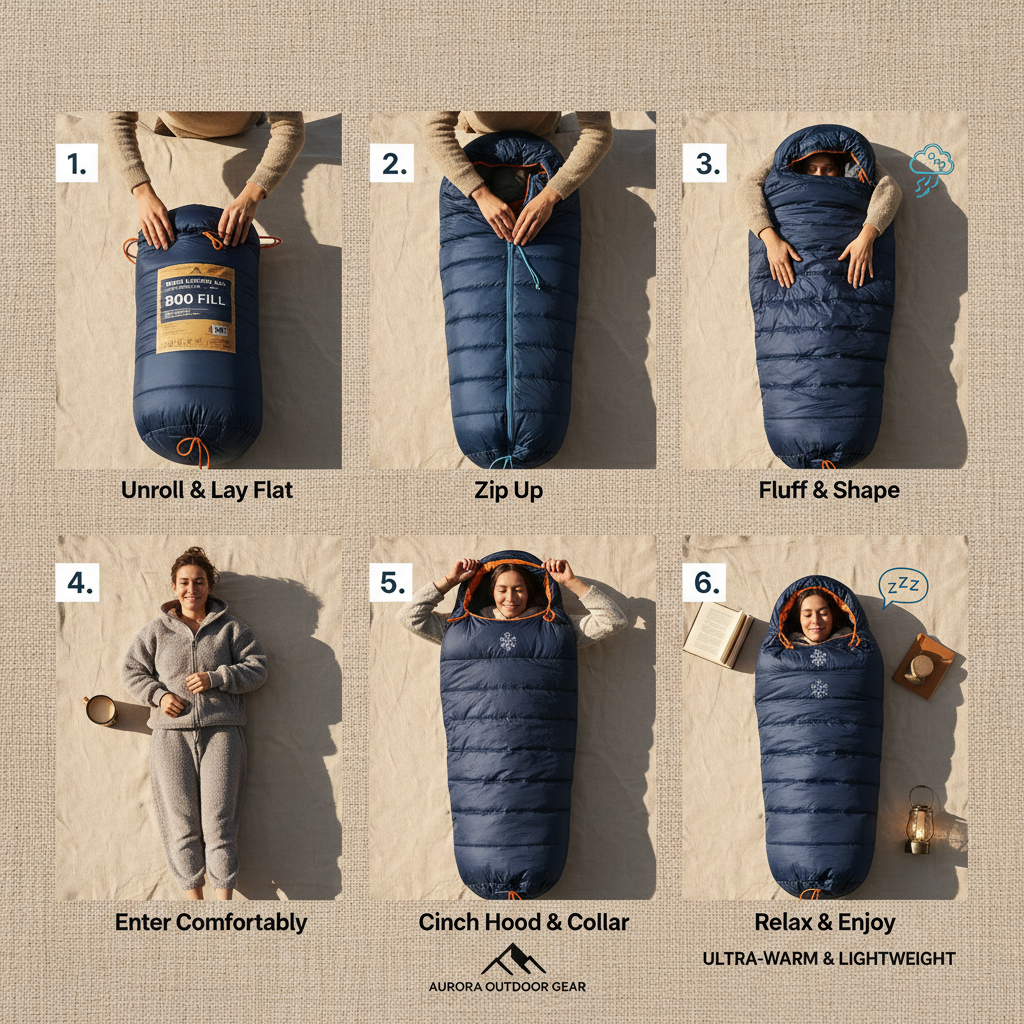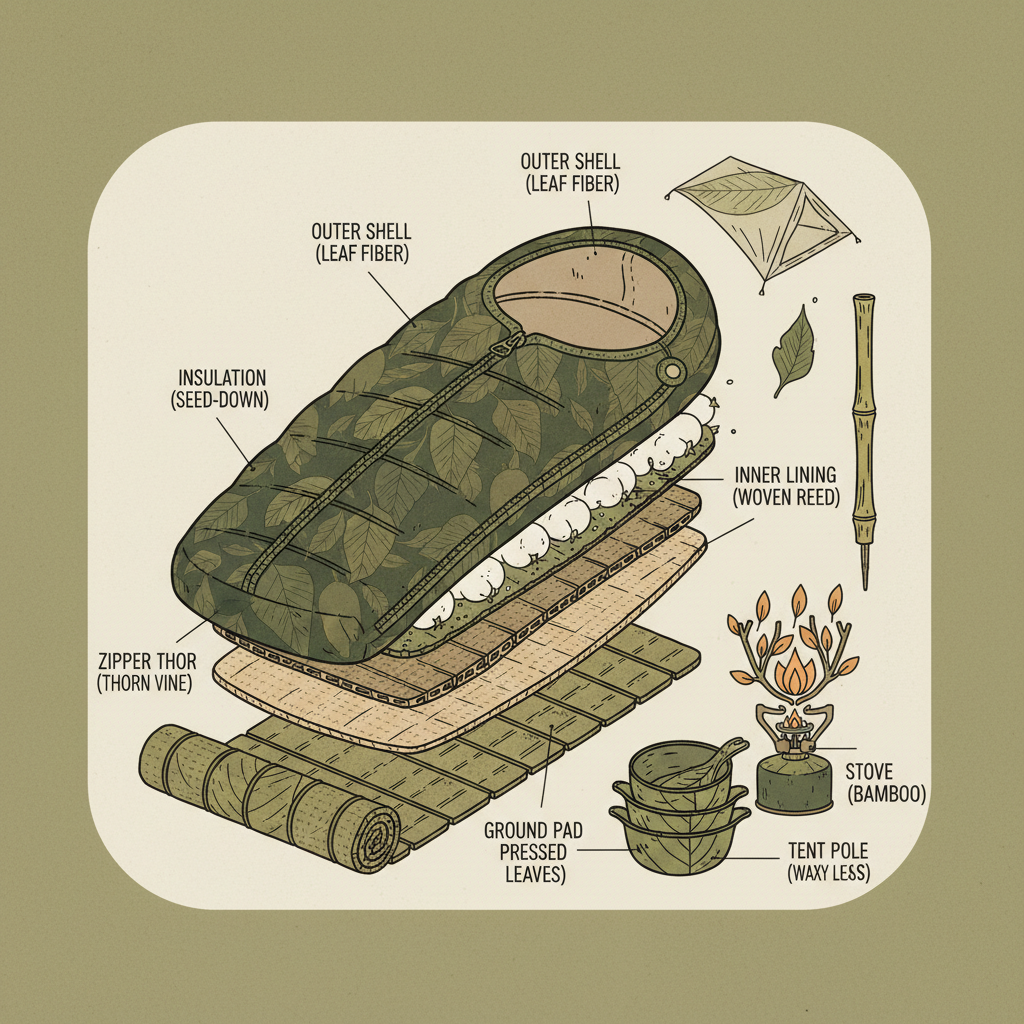
The global outdoor gear market is witnessing a significant shift toward high-performance synthetic insulation, driven by the demand for gear that maintains thermal efficiency even in humid conditions. For procurement managers and brand owners, finding a reliable outdoor sleeping bag factory that balances weight, moisture resistance, and cost-effectiveness has become a primary operational challenge.
The complexity lies in the material science of synthetic wadding and the precision of the shell construction. As hiking and camping trends evolve, the industry is moving away from generic designs toward specialized "mummy" and "envelope" architectures that optimize heat retention by reducing dead air space. This transition requires manufacturers to integrate advanced assembly line production with stringent quality control to meet international export standards.
This technical analysis explores the critical engineering factors behind high-performance sleeping bags, from the impact of gsm (grams per square meter) filling to the importance of waterproof coatings. By analyzing these specifications, buyers can better evaluate the capabilities of a professional outdoor sleeping bag factory and ensure their product line meets the rigorous demands of modern adventurers.


The core of any high-performance sleeping bag is the insulation layer. Modern synthetic cotton wadding, such as 150gsm polyester, creates a network of microscopic air pockets that trap body heat. The efficiency of this process depends on the density of the fibers and the stability of the wadding during compression.
Complementing the filling is the shell fabric. Using 190T Embossed Nylon with a W/R-Cire finish ensures that the bag resists wind penetration and light precipitation. This multi-layered approach—combining a breathable lining, a thermal core, and a weather-resistant outer shell—is the standard engineering logic employed by a top-tier outdoor sleeping bag factory.
When evaluating a product, the "Comfortable Temperature Scale" (e.g., 15℃ to 5℃) is more critical than the absolute limit. This range indicates the temperature at which a standard adult can sleep comfortably without shivering. This is achieved through the synergy of the 150gsm polyester filling and the mummy-style taper, which minimizes the volume of air the body must heat.
The use of 190T Polyester Pongee Cire for the lining optimizes skin-contact comfort while facilitating moisture transport. A critical engineering detail is the long zipper system; it not only allows for easy entry but also serves as a primary ventilation mechanism, preventing condensation build-up inside the bag during transitional seasons like Spring and Autumn.
Weight and packability are the final decisive factors. A total weight of 1.2kg for a full-sized adult bag (215x85x50cm) represents a balanced optimization between thermal mass and portability. The integration of a compression sack allows the product to be reduced to a compact 45x28x28cm volume, meeting the essential requirements for long-distance hiking.
The industry continues to debate the merits of synthetic polyester wadding versus natural down. While down offers a superior warmth-to-weight ratio, it fails catastrophically when wet, losing its loft and insulating properties. This makes synthetic alternatives the preferred choice for high-humidity environments and unpredictable weather.
Furthermore, synthetic bags are significantly easier to maintain and clean, which is a vital consideration for commercial rental fleets or army-grade applications. The durability of 190T nylon ensures that the bag can withstand repeated compression cycles without degrading the internal filling.
Quantifying the performance of outdoor sleep systems requires a normalized assessment across several dimensions: thermal retention, moisture management, packability, durability, and weight efficiency. These metrics allow buyers to compare different configurations objectively.
The following assessment evaluates a standard synthetic mummy bag against typical industry baselines. These scores represent relative engineering ratings based on material density and shell specifications.
In typical deployment scenarios, the synthetic mummy bag is utilized for three-season trekking (Spring, Autumn, and mild Winter). The splicing capability of single sleeping bags allows for flexibility in the field, where two bags can be combined into a double configuration for shared warmth, a feature often requested by family campers and leisure hikers.
For commercial operators, OEM customization of logos and colors allows for brand differentiation. The durability of the 190T Embossed Nylon makes these bags suitable for rugged environments where abrasion against tent floors and rocky terrain is common, ensuring a longer product lifecycle and reduced replacement rates.
The next evolution in sleeping bag manufacturing focuses on "smart" insulation—materials that can adapt their loft based on external temperature changes. We are seeing a trend toward recycled polyester wadding to meet ESG (Environmental, Social, and Governance) requirements, as global brands push for a circular economy in the textile industry.
Additionally, the integration of nano-coatings is replacing traditional Cire finishes to provide superior water repellency without compromising the breathability of the nylon shell. This will allow bags to handle heavier precipitation while efficiently venting internal moisture.
From a manufacturing perspective, the automation of the quilting process is reducing human error in filling distribution. This ensures that no "cold spots" exist in the bag, maximizing the thermal efficiency of every gram of synthetic cotton used.
Choosing the right configuration depends on the target user's environment and the intended use case. A baseline configuration may suffice for casual camping, whereas a high-duty configuration is necessary for professional guiding or military applications.
Procurement officers should evaluate the balance between shell denier, filling weight, and the comfort temperature range. Over-specifying can lead to unnecessary weight and cost, while under-specifying risks user safety in cold-weather scenarios.
The following matrix provides a framework for selecting the appropriate bag profile based on standard engineering configurations used by an outdoor sleeping bag factory.
| Configuration Type | Thermal Insulation | Environmental Suitability | Recommended Use Case |
|---|---|---|---|
| Baseline Profile | Low (100gsm) | Mild / Summer | Leisure Camping |
| Standard Profile | Medium (150gsm) | Spring / Autumn | Hiking & Backpacking |
| Cold-Weather Profile | High (200gsm+) | Winter / Alpine | Expedition / Mountaineering |
| Compact Profile | Medium (120gsm) | Moderate / Variable | Ultralight Trekking |
| Heavy-Duty Profile | High (250gsm) | Extreme Cold | Military / Survival |
| Hybrid Profile | Variable / Zoned | Transitional | Multi-climate Tours |
The "T" stands for Thread Count, referring to the number of threads per square inch. A 190T count provides a dense weave that balances lightweight properties with sufficient durability to prevent tears and wind seepage. In the context of a professional outdoor sleeping bag factory, 190T is considered the industry standard for mid-range hiking gear, offering a reliable barrier against the elements without adding excessive bulk.
Synthetic wadding, such as polyester, is inherently hydrophobic, meaning it does not absorb water and retains its structure even when damp. Down, conversely, collapses when wet, eliminating the air pockets necessary for insulation. Therefore, for waterproof or high-moisture applications, synthetic filling is technically superior as it ensures the sleeper remains warm even if the outer shell's water resistance is breached.
The Mummy style is engineered with a tapered shape that closely follows the human body's contours. This reduces the volume of "dead air" inside the bag, which the body would otherwise have to heat up. While Envelope bags offer more room for movement, the Mummy design is significantly more efficient for thermal retention, making it the preferred choice for cold-weather hiking and technical outdoor use.
Yes, the temperature scale is directly linked to the filling weight (gsm) and the bag's architecture. By increasing the polyester wadding from 150gsm to 200gsm or 250gsm, a factory can lower the comfort temperature limit. Additionally, adding a hooded envelope design can further trap heat around the head, effectively extending the bag's usability into colder temperature ranges.
Synthetic bags are generally more durable and easier to maintain than down. They can typically be machine-washed on a gentle cycle with mild detergents. The key is to avoid high-heat drying, which can damage the polyester fibers. Proper storage in a large breathable bag, rather than permanent compression in a small sack, helps maintain the loft and long-term thermal performance of the insulation.
Buyers should look for consistency in stitching, the quality of the zipper (smoothness and durability), and the uniformity of the filling distribution. Verifying the manufacturer's ability to provide consistent GSM ratings and waterproof Cire finishes is essential. Furthermore, a factory's capacity for OEM customization and their experience with international export standards (such as those for Europe and North America) are strong indicators of operational maturity.
The selection of a high-performance sleep system is a technical exercise in balancing thermal efficiency, moisture management, and weight. The transition toward 190T Nylon shells and optimized synthetic wadding demonstrates the industry's focus on reliability in unpredictable outdoor environments. For professional buyers, the priority must remain on the verifiable specifications—gsm filling, fabric density, and accurate temperature ratings—rather than generic marketing claims.
As the market evolves toward more sustainable and "smart" textiles, partnering with an experienced outdoor sleeping bag factory ensures that product lines remain competitive and safe. By focusing on the engineering fundamentals of thermal architecture, brands can deliver gear that genuinely enhances the outdoor experience for hikers and adventurers worldwide.